

Dry needling

Dry needling terapija

Dry needling is becoming an increasingly popular technique in the treatment of pain and tension in the musculoskeletal system and mobility problems. Although it is often compared to acupuncture, this technique does not have much in common with this traditional method of Chinese medicine. The similarity is in the needles used, and dry needling focuses on specific points in the muscles to release tension and reduce pain.

What is dry needling?

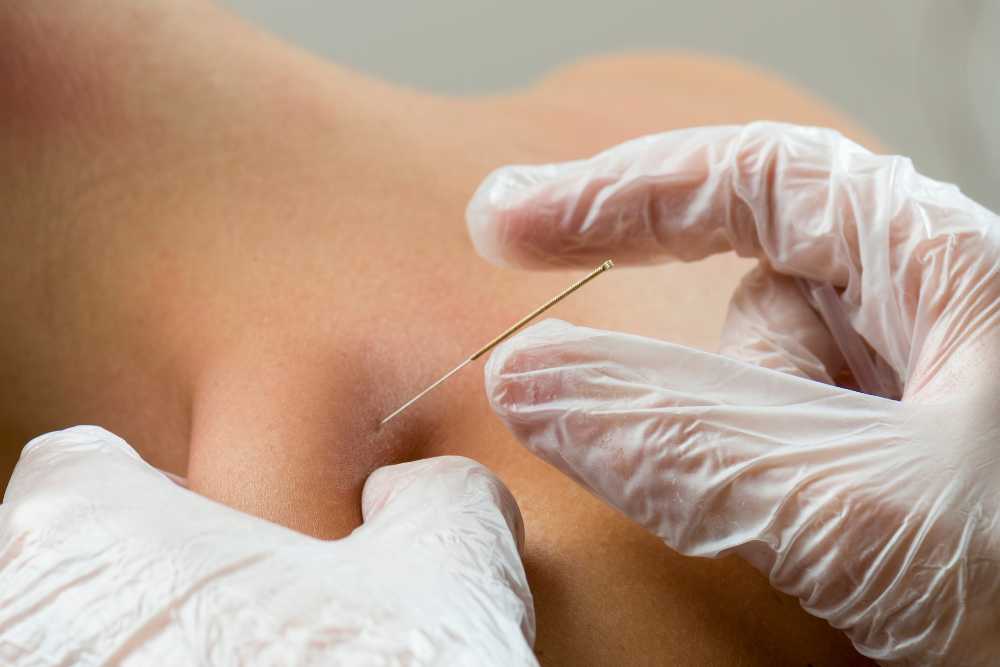
Dry needling is a physiotherapy technique that involves inserting a thin needle into specific points in the muscles to reduce pain and improve function. The name “dry puncture” comes from the fact that only needles are used, without the administration of any liquids or drugs. This technique can be effective in treating various conditions that cause pain and muscle tension.

The main purpose of dry needling I is to solve pain and tension in the muscles. When a needle is inserted into a trigger point, it stimulates a reduction in muscle tension and increases blood flow to the area. This can result in immediate pain relief and improved mobility. The therapist carefully selects the points to be treated, focusing on those related to the patient’s specific problems. Each patient is approached individually and the application technique is adapted to his problem.

What does dry needling treatment look like?

The treatment itself begins with an examination by a physiatrist , during which the patient’s condition is assessed, information about complaints is collected and muscles that cause pain or limited mobility are identified. Based on that, the physiotherapist makes a therapy plan and determines the places where the needles will be applied.

After the assessment, the patient assumes a comfortable position – usually lying on the therapy table. The skin at the injection site is disinfected, and then a very thin sterile needle is inserted into specific trigger points . Due to their fineness, the needles do not cut the tissue, but pass through it with minimal discomfort.

At the time of application, the patient may feel a slight tingling, tingling or short-term muscle twitch. This reaction is called the local twitch response and is a sign that the needle hit the right spot and activated the muscle relaxation process. After that, the feeling of tension gradually decreases, and the muscle relaxes.

Depending on the condition, the needle can remain in the muscle from a few seconds to a few minutes. In case of chronic pain or severe spasms, the physiotherapist can repeat the procedure at several different points during the same treatment.

The treatment itself usually lasts between 15 and 30 minutes , depending on the number of muscles being treated. After the needles are removed, the patient may feel relief, better mobility and reduced tension. In some cases, there may be mild tenderness or a “muscle soreness” feeling, which resolves within 24-48 hours.

In order for the effect to be complete and long-lasting, dry needling is often combined with kinesitherapy , manual therapy or physical procedures , which achieves faster recovery and reduces the possibility of pain returning.

What are the benefits of dry needling therapy?

Dry needling works by inserting the needle directly into the muscle fiber and mechanically breaking the tension in the muscle . This stimulates circulation, improves the flow of oxygen and nutrients, while at the same time expelling metabolic byproducts that cause pain and stiffness. This combination of effects leads to faster muscle relaxation and regeneration.

The main benefits of the treatment include:

Scientific research shows that dry needling stimulates neuromuscular activation , reduces the transmission of pain signals in the nervous system and has a positive effect on the central regulation of pain. This is precisely why this method has found wide application both in sports medicine and in the rehabilitation of chronic pain conditions.

What can be treated with the dry needling method?

Dry needling is an effective method that helps with a wide range of conditions – from sports injuries to chronic pain and rehabilitation after surgery. Its application is especially important when it comes to muscle spasms and trigger points that cause pain and stiffness.

The most common indications for dry needling include:

  • Sports injuries – damage to muscles, tendons or ligaments. It relieves tension and pain, and for an even better effect it is often combined with Indiba therapy .
  • Back pain – especially in the lower back where myofascial knots are a common cause of pain. Dry needling helps to release them and restore mobility.
  • Headaches and migraines – muscle tension in the neck and shoulders can contribute to these complaints. This method reduces tension and relieves symptoms.
  • Rehabilitation after surgical procedures – after surgery, muscles can become stiff and painful. Dry needling accelerates recovery, especially in combination with kinesitherapy.
  • Tension headaches and migraines – caused by stress and tension in the muscles of the neck and head. Treatment reduces the frequency and intensity of attacks.
  • Plantar fascitis – a painful condition in the foot accompanied by inflammation of the fascia. Dry needling helps reduce pain and speed tissue recovery.

Dry needling is not acupuncture

Dry needling uses a thin needle similar to that used in acupuncture, however, the difference lies in the approach and the goal. While acupuncture follows traditional Chinese methods and theories, dry needling focuses on directly inserting needles into points in the muscles, known as trigger points or myofascial nodes, which are sensitive points that develop in your muscles . This technique aims to directly release tension in the muscles and reduce pain. Although similar tools are used, there is a difference between the two methods, the key difference lies in the philosophy and methods. Acupuncture is based on Chinese medicine and the theory of energy (qi) balance in the body, while dry needling is a technique based on Western medicine and follows an anatomical approach, focusing on direct insertion of needles into myofascial nodes to reduce pain and tension.

How many treatments are needed?

The number of required dry needling treatments varies from patient to patient and depends on several factors: the type of complaint, its duration, the presence of chronic changes and the body’s reaction to therapy.

In acute injuries or fresh muscle spasms, relief is often felt after the first treatment . However, for chronic conditions, such as long-term back pain, headaches or the effects of sports injuries, a series of 4 to 6 treatments is usually recommended to achieve lasting results.

The frequency and number of treatments is affected by:

  • Duration of the problem – the longer the pain is present, the more treatment is needed.
  • Physical activity of the patient – athletes or physically active people may require more frequent treatments due to muscle strain.
  • Intensity of symptoms – more severe pain and stiffness usually require a more continuous approach.
  • Combination of therapies – when dry needling is combined with kinesitherapy or Indiba therapy, results are achieved faster and last longer.

After the examination, our physiotherapist will give an individual recommendation and therapy plan adapted to your condition.

Is dry needling painful?

Dry needling uses very thin sterile needles, so the feeling during the injection is much milder compared to a classic injection. Most patients describe the sensation as a short-term burning sensation, a light stabbing sensation, or a momentary muscle twitch. This twitch (known as the local twitch response ) is actually a positive sign that the needle has hit the right trigger point and the muscle relaxation process has begun.

After the treatment, it is normal to experience mild muscle tenderness or a feeling similar to “muscle inflammation” – especially in the first hours. This feeling usually disappears within 24-48 hours , during which time moderate physical activity, light stretching and sufficient fluid intake are recommended to speed recovery.

The most common feelings during and after the treatment:

  • Mild stinging – when the needle enters the muscle.
  • A short-term muscle twitch – a sign that the treatment is effective.
  • Temporary tenderness – similar to the feeling after exercise.
  • Fast relief – in the form of reduced pain and greater mobility.

It is important to emphasize that dry needling is a safe method when performed by a trained physiotherapist, and the discomfort is short-lived and negligible compared to the benefits it provides.

Dry needling - the most frequently asked questions

Although dry puncture is a safe therapeutic technique, like any medical intervention, it can cause some unwanted effects. Possible side effects include temporary pain at the injection site, redness of the skin, or rarely, minor bruising. Serious complications are rare, especially when the procedure is performed by a trained and experienced therapist.

This method is applied in different situations and for different muscle problems. It is most often used in the treatment of sports injuries, back pain, headaches, tension migraines, and other conditions that cause muscle tension. It can also be used as part of rehabilitation after surgery or injury, and is often used when a patient suffers from chronic or acute muscle problems that have not responded adequately to other therapeutic methods. This technique is often used in conjunction with other forms of physical therapy to achieve a comprehensive treatment approach. It is usually used as part of a more extensive pain management plan that may include exercise, stretching, massage, and other techniques. Before scheduling this therapy , a physiatrist’s examination and evaluation is necessary to make sure that this therapy is the best solution for your problem.

Usually, patients notice a positive reaction after only a few visits.

Why choose Herodicus for dry puncture?

The Herodicus specialist practice has a large team of experienced experts from various fields. Our team consists of a group of experts with extensive experience in diagnostics and therapy, dedicated to providing top services to our patients.

Thanks to innovative treatment methods and a personalized approach to each patient, we have achieved a high percentage of successfully completed therapies. According to the statistics that we carefully monitor, we have managed to solve the problems of our patients in an impressive 94% of cases.

This remarkable statistic is a testament to the efficiency of our team and the practice’s commitment to providing the best possible patient care and support. Herodikus specialist practice strives to be a synonym for a quality solution in physical therapy, offering expertise, empathy and results that improve the lives of our patients.

We provide rehabilitation that includes Physical therapy wide spectrum, including electromagnetic stimulation, laser, Indiba active therapy, dry needling, spinal decompression, kinesitherapy, Kinesiology tape, emmet technique and many others.

Visit us or call us and schedule your appointment!

schedule-appointment-2

Schedule

Your Appointment

today

If you have a question or need a telephone consultation with a physiotherapist, feel free to contact us.

schedule-appointment-2

Schedule

Your Appointment

Our Clients' Experiences

I regularly bring my grandmother to therapy at Herodikus for pain in her hands and neck, and we are very satisfied! The staff is very professional, kind, the clinic has the latest equipment, the possibility of therapy with Indiba, interferential current and laser. A truly wonderful environment, thank you for everything! Heartfelt recommendation!

Jelena Sribar

Absolutely delighted with the service, I had a problem with back pain that completely disappeared after about 10 therapies. Now I regularly go for massages to prevent the pain from recurring. I can do sports activities again, which means a lot to me.

Đorđe Jovanić
I came on a recommendation and the experience was better than expected. I have been going to therapy regularly for the last month and everything is at the highest level, from scheduling to the service and treatment of clients. All employees are extremely nice and professional. Warm recommendation.

Aleksandar Nastić

I regularly bring my grandmother to therapy at Herodikus for pain in her hands and neck, and we are very satisfied! The staff is very professional, kind, the clinic has the latest equipment, the possibility of therapy with Indiba, interferential current and laser. A truly wonderful environment, thank you for everything! Heartfelt recommendation!

Jelena Sribar

Absolutely delighted with the service, I had a problem with back pain that completely disappeared after about 10 therapies. Now I regularly go for massages to prevent the pain from recurring. I can do sports activities again, which means a lot to me.

Đorđe Jovanić