

Kinesitherapy

Kinesitherapy , also known as kinesi therapy or movement therapy , is a scientifically based approach to rehabilitation through targeted, individually dosed exercises. At the Herodikus office in Belgrade, our team of physiotherapists applies kinesitherapy for faster recovery, pain reduction and the return of body functionality – without overloading and without pain.

Chinese therapy is more than classical exercise. It is a personalized therapy program that combines biomechanics, neurophysiology and progressive loading to relearn the body’s proper movement patterns.

Schedule your appointment: 069 401-05-36
or via CONTACT FORM

What is kinesitherapy and how does it work?

Kinesitherapy is the systematic application of movements and specific exercises for therapeutic purposes, based on biomechanics, neurophysiology and principles of progressive loading .
Unlike “generic exercise”, kinesi therapy is an individually tailored program that starts from an assessment of posture, mobility and strength, and then introduces precisely dosed exercises that are gradually upgraded.

In this way , neuromuscular control, stability and endurance are restored – without overloading the tissues and without the risk of injury.
The therapy is always led by a physiotherapist who monitors the body’s reactions and, if necessary, adjusts the intensity, duration or technique, so that the result is safe, effective and measurable .

What you can expect from the treatment:

  • brief assessment of posture, gait pattern and range of motion
  • defining the main goal (e.g. pain-free sitting, more stable knee, better shoulder mobility)
  • guided exercises with the constant supervision of a therapist
  • home plan with rep count and progression
Kinezi terapija Beograd

What does kinesitherapy treatment look like in Herodicus?

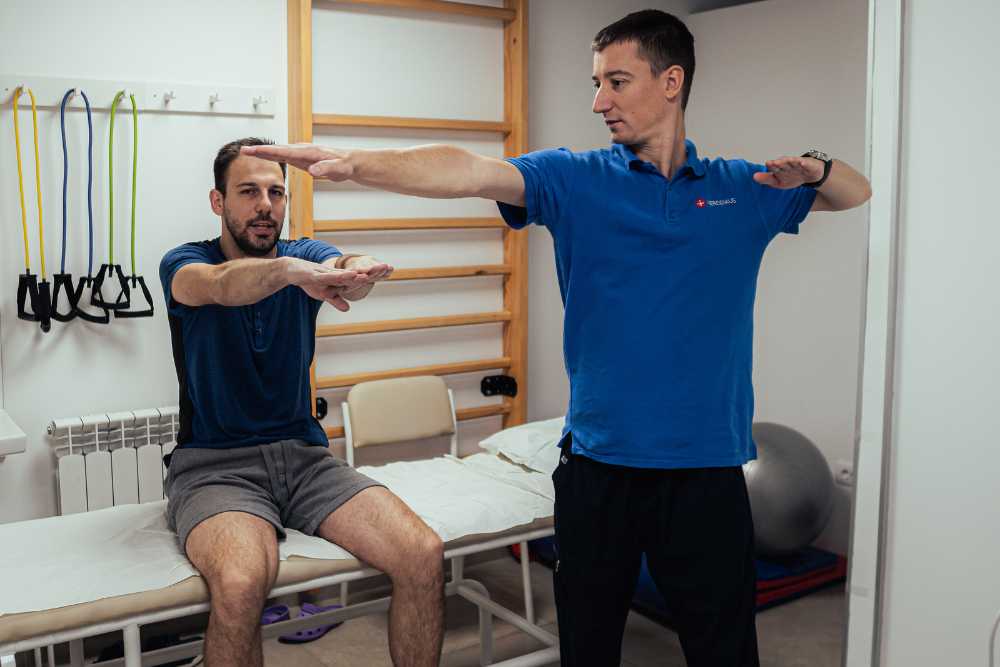
The therapy is carried out 1-on-1 , under the constant supervision of a physiotherapist.
At the beginning, a posture analysis is done, followed by the development of an individual plan.
During each treatment, targeted exercises are applied that activate specific muscle groups , improve joint stability and restore full range of motion.

If there is stiffness, muscle spasm or scar tissue, the therapy can be combined with Indiba therapy or Cupping therapy , which additionally increases elasticity and accelerates regeneration.

Types of kinesitherapy

In the Herodikus office, kinesitherapy is not carried out according to a template.
The type of therapy is chosen depending on the stage of recovery, the type of injury, the patient’s goals and the physiotherapist’s assessment.

Passive kinesitherapy

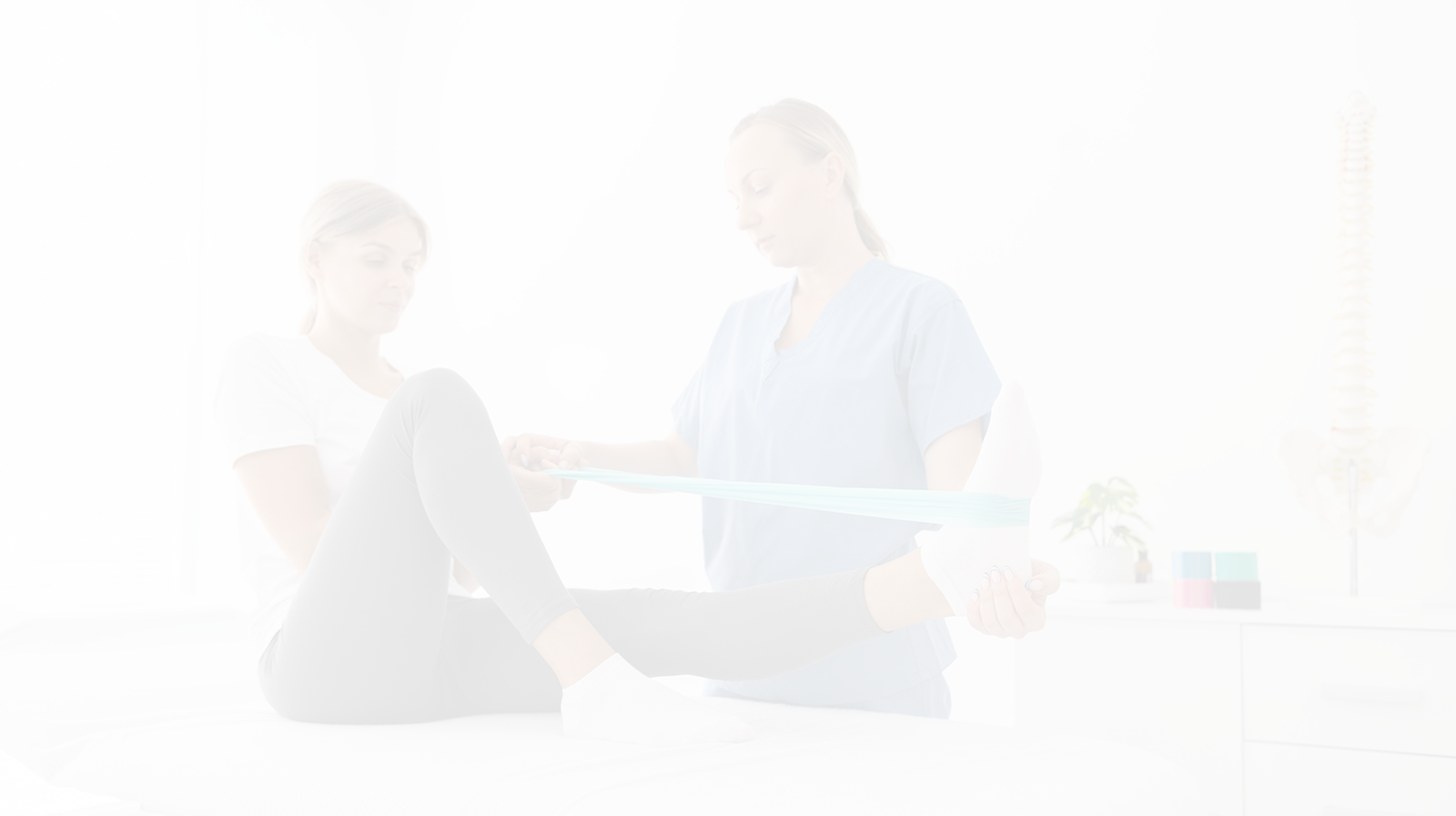
In passive kinesitherapy , the physiotherapist moves a part of the body instead of the patient , while the patient does not actively participate.
This method is used when the muscles are weakened, there is pain or there is a limited range of motion – most often after operations, fractures or prolonged immobilization (eg wearing a cast, orthosis or longette).

The goal of passive kinesitherapy is to:

  • preserves joint mobility,
  • prevent contractures and muscle shortening,
  • improve local circulation and lymphatic drainage,
  • tissue preparation for the next, active phase of therapy.

The exercises are completely painless , and the therapist carefully controls the angle of movement, pace and load in order to prevent additional tissue damage.

Active kinesitherapy

In active kinesitherapy , the patient independently performs exercises under the supervision of a physiotherapist.
Exercises are carefully selected to activate certain muscle groups, increase strength, stability and endurance, but without the risk of overloading.

This type of therapy is used when:

  • it is necessary to strengthen the muscles and restore functionality ,
  • there is joint instability or poor posture,
  • the patient wants a faster and longer recovery .

Active kinesi therapy includes corrective exercises for breathing, balance and coordination , which re-establishes the natural pattern of movement.
The physiotherapist monitors each patient in real time, corrects technique and dosage and records progress.

Actively assisted kinesitherapy

This form combines passive and active therapy.
The patient actively participates in the movement, but the physiotherapist partially helps during the performance, controlling the direction, speed and range of movement.
In this way:

  • facilitates the transition from passive to active phase,
  • reduces pain and muscle tension,
  • achieves proper movement mechanics.

Actively assisted therapy is especially used for:

  • recovery after shoulder, hip or knee injuries ,
  • neuromuscular weakness or partial paresis,
  • elderly patients who do not yet have full movement control.

Specific targeted exercises

When the pain and limitations are reduced, there is a phase of specific target exercises – in which the full functionality of the body is restored.
These exercises are always individually programmed and include:

  • stabilization exercises of the trunk and “core” musculature ,
  • mobility exercises for the shoulder, hip and thoracic spine ,
  • proprioception exercises (balance and orientation of the body in space),
  • dynamic exercises with elastic bands, pilates balls or weights ,
  • corrective posture and breathing exercises .

The goal is to teach the body a new, correct pattern of movement, thus preventing the return of pain and ensuring a long-term result.
Through specific exercises, strength, coordination, flexibility and control are simultaneously strengthened.

What are the goals of kinesitherapy?

Kinesitherapy works on the cause , not only on the symptom.
Through precisely dosed exercises and proper breathing, the body relearns proper movement patterns.

The main objectives are:

  • restoring movement control and neuromuscular coordination,
  • increasing joint stability and body balance,
  • activation of the “core” musculature for a healthy spine,
  • reducing pain naturally , without passively “extinguishing” symptoms,
  • prevention of repeated injuries and postural dysfunctions.

Exercises during therapy increase:

Early implementation of therapy in the injured region prevents excessive formation of scars, shriveling of ligaments and joint sockets.

Kinesiotherapy price - Belgrade

See the price list of our kinesitherapy services

The difference compared to classical physical therapy

Classical physical therapy often relies on passive modalities (electrotherapy, ultrasound, heat/cold), which can quickly relieve symptoms but do not change the cause — the way you move. Chinese therapy bridges that gap with an active approach: through targeted exercises, it restores joint stability, controls movement and balances muscle tone. Instead of “turning off” the pain without changing the pattern, we teach the body to work properly, so the symptoms go away because the mechanism of their origin is taken away. We use passive methods as support (eg reducing spasms before work or faster tissue relaxation), but exercises are the essence. Additionally, the program is measurable: clear goals, pre/post tests, and functional performance monitoring (squat without pain, sit longer without discomfort, safe return to running). That’s why the results last longer and are sustainable through a structured home plan.

When is kinesitherapy used?

Kinesi therapy is the therapy of choice in many conditions, especially when the goal is to restore function and reduce the risk of re-injury.

The most common indications:

  • after immobilization or operations (orthopedic and neurological)
  • back and neck pain, postural dysfunctions, scoliosis pattern
  • shoulder, knee, ankle, hip injuries (sports and everyday)
  • degenerative changes (eg osteoarthritis) with reduced function
  • joint instability and weakness of deep stabilizers
  • balance and prevention of falls in the elderly
  • return to training or work that requires physical effort

Clear candidates for kinesitherapy are anyone who wants to reduce pain, improve posture, and regain control of movement—from those who sit a lot, to recreational athletes, to post-surgery patients. Through targeted exercises, we first calm the symptoms and then change the movement pattern so that the problem does not return. The plan is individual, measurable and easily fits into everyday life.

In our office Herodicus, we combine kinesitherapy with many other physical procedures in order to achieve the best results and to cure our patients in the shortest possible time, which is our primary goal.

Schedule your appointment: 069 401-05-36
or via CONTACT FORM

Pediatric kinesitherapy

In children, kinesi therapy plays a key role in the development of proper motor skills and the correction of early movement disorders.
Used in:

  • delayed motor development,
  • problems with balance, coordination and reflexes,
  • foot and knee deformities,
  • improper posture and initial scoliosis.

Our therapists are specialized in working with children and through play, movement and stimulation help develop proper posture and movement.

Results and effects of kinesitherapy

Through regular work at Herodicus, patients most often achieve:

  • reducing pain and stiffness,
  • better strength and flexibility,
  • greater range of motion and stability,
  • more correct posture,
  • faster return to sport or work,
  • increased independence and quality of life.

This therapy doesn’t just treat the symptom – it changes the way the body works.

Adaptability of kinesitherapy for all generations

An important element of kinesitherapy is DOSAGE. Dosing the patient through movement is an element that is essential for his recovery. That is why this therapy can be applied at all ages, with the correct dosage, both in babies and in the elderly.

This therapy can be combined with the use of all physical agents, it is often the case that actually physical agents precede each start of therapy for the reason that with various heat or cold procedures of physical agents we “prepare” the soft tissue structures for the beginning of the movement itself. Indiba Active Therapy can be combined and applied directly through the execution of the movement, which often results in good results after the movement itself. By applying radiofrequency waves through active movement, it contributes to a better performance of the movement itself, because soft tissue structures (muscles, tendons, ligaments) absorb the waves through different angles and in different degrees of stretch and activity.

Kinesitherapy - frequently asked questions

This therapy is used for many different reasons. From injury recovery to general fitness. These are some of the most common treatments:

Sports condition and body movements
Injury prevention
Weight management
Plyometric training
Weight training/Resistance training
Core stabilization
Cardiovascular rehabilitation and disease treatment
Muscle tears
Ligament tears
Back injuries
Hip injuries
Ankle injuries
Flexibility and stretching programs
Exercise programs
Specific sports training

  • one treatment lasts 30-45 minutes ,
  • recommended 2-3 times a week ,
  • the effects are already visible after a few appointments,
  • the full result is achieved through continuity and a home exercise plan.

Our physiotherapists monitor every step of your progress and adjust the program according to your goal.

It depends on the condition, but the first results are already visible after 2-3 weeks of regular treatments.

No. All exercises are dosed and safe, adapted to the patient’s capabilities.

Physiotherapy is completely safe and has no side effects.

Yes, the combination with Indiba therapy, therapeutic massage or kinesio taping gives the best effect.

Physiotherapy is a great way to find out what allergies you have and, in most cases, to contribute to their elimination.

Most likely. Muscles work in groups, not individually, so we test all the muscles in the region where the problem is. Any test that is ‘poor’ is corrected with kinesiology techniques, such as rubbing or holding points or nutritional supplements. Sometimes one of the muscles has ‘turned off’ the other muscles in the group, so the flow of energy needs to be rebalanced, allowing all the muscles to work together synergistically. Other possibilities are that one or more muscles may be too tight or weak (often due to overuse) and unable to stretch to their full potential. Sometimes pain in one part of the body actually refers to a completely different part of the body, so this is something we check as well.

Absolutely. Kinesitherapy strengthens spinal stabilizers and corrects bad posture – the most effective method for chronic back pain.

schedule-appointment-2

Schedule

Your Appointment

today

If you have a question or need a telephone consultation with a physiotherapist, feel free to contact us.

schedule-appointment-2

Schedule

Your Appointment

today

If you have a question or need our help or consultation, feel free to contact us.

Our Clients' Experiences

I regularly bring my grandmother to therapy at Herodikus for pain in her hands and neck, and we are very satisfied! The staff is very professional, kind, the clinic has the latest equipment, the possibility of therapy with Indiba, interferential current and laser. A truly wonderful environment, thank you for everything! Heartfelt recommendation!

Jelena Sribar

Absolutely delighted with the service, I had a problem with back pain that completely disappeared after about 10 therapies. Now I regularly go for massages to prevent the pain from recurring. I can do sports activities again, which means a lot to me.

Đorđe Jovanić
I came on a recommendation and the experience was better than expected. For the last month, I have been regularly going to therapy and everything is at the highest level, from scheduling to the service and treatment of clients. All employees are extremely nice and professional. Warm recommendation.

Aleksandar Nastić

I regularly bring my grandmother to therapy at Herodikus for pain in her hands and neck, and we are very satisfied! The staff is very professional, kind, the clinic has the latest equipment, the possibility of therapy with Indiba, interferential current and laser. A truly wonderful environment, thank you for everything! Heartfelt recommendation!

Jelena Sribar

Absolutely delighted with the service, I had a problem with back pain that completely disappeared after about 10 therapies. Now I regularly go for massages to prevent the pain from recurring. I can do sports activities again, which means a lot to me.

Đorđe Jovanić